
Dental bridges are a common solution for missing teeth. They help restore your smile and improve oral health. If you have lost one or more teeth, dental bridges can fill the gap. This treatment is important because missing teeth can affect chewing, speech, and confidence. In this blog, you will learn about dental bridges, their types, benefits, procedure, and aftercare. We will also answer common questions to help you make informed choices.
What Are Dental Bridges?
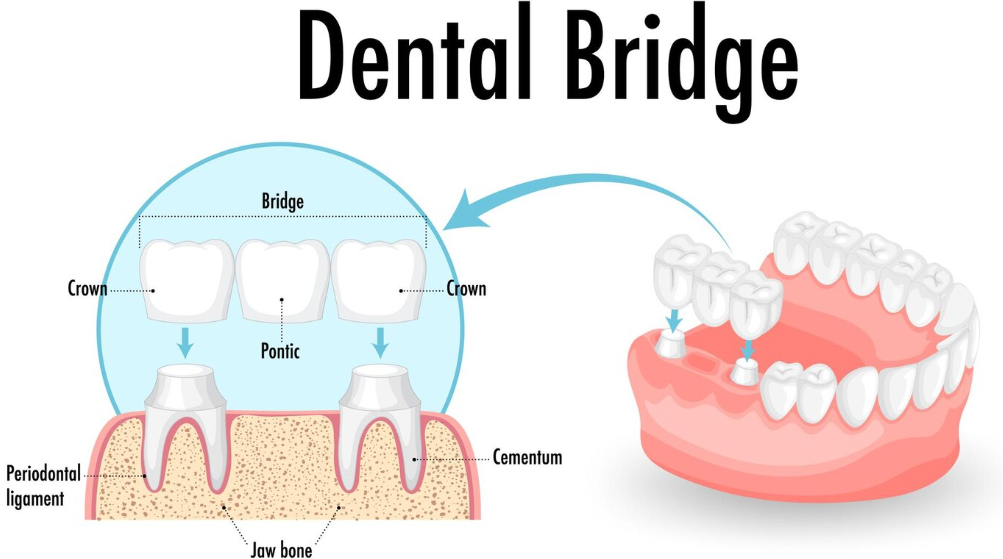
Dental bridges are fixed dental restorations. They replace one or more missing teeth by using nearby teeth for support. A bridge has one or more artificial teeth, called pontics. These are held in place by crowns attached to the natural teeth or implants on each side of the gap. Because dental bridges are fixed, you cannot remove them like dentures. Instead, they stay in your mouth and work like natural teeth. According to the American Dental Association (ADA), dental bridges help keep your bite even and prevent other teeth from shifting.
Types of Dental Bridges
There are several types of dental bridges. Each type is designed for different needs. Here are the main types:
Each type has its own benefits. Your dentist will help you choose the best option for your needs.
Benefits of Dental Bridges
Dental bridges offer many advantages for oral health and daily life. For example, they:
In addition, dental bridges are a long-lasting solution for missing teeth. They can improve your quality of life by making eating and talking easier.
Who Needs Dental Bridges?
Not everyone needs a dental bridge. However, you may be a good candidate if you:
Sometimes, people with weak teeth or gum disease may need other treatments first. Therefore, your dentist will check your oral health before recommending a dental bridge.
The Dental Bridge Procedure
The process for getting a dental bridge usually takes two or more visits. Here is what you can expect:
After the procedure, you can eat and speak more easily. Your dentist will give you tips for caring for your new bridge.
Aftercare and Maintenance
Proper care helps your dental bridge last longer. Here are some tips:
With good care, dental bridges can last 5 to 15 years or more. Your dentist can show you the best way to clean around your bridge.
Potential Risks and Complications
Most people have no problems with dental bridges. Still, some risks can occur, such as:
To reduce these risks, follow your dentist’s advice and maintain good oral hygiene. If you notice pain or changes, contact your dentist right away.
Frequently Asked Questions
If you are considering dental bridges in your area, talk to a qualified dentist. They can help you decide if this dental restoration is right for you. For personalized advice, consult dentist at WhiteCaps Advanced Dental and Maxofacial Clinic today.